Washington Keeps Changing Its Mind on Ethylene Oxide, and Sterile Processing Is Stuck Waiting
A federal emissions rule has swung from strict to exempt to proposed rollback in under two years, while a single calibration error forced Medline to recall almost 15 million sterile drapes. The two stories, regulatory and operational, point to the same conclusion: sterility assurance now depends as much on process control as on which sterilization method a hospital chooses.
Sterilization supplies and consumables rarely make headlines, which is part of why they are easy to overlook as a source of risk. Indicators, wraps, pouches, and detergents sit quietly behind every surgical procedure, doing their job until something goes wrong. Two threads from 2025 and 2026, one regulatory and one operational, show how much is actually moving in this space. This article sets the market-sizing numbers in our companion report aside and looks at what has actually been happening.
A Federal Rule That Cannot Decide What It Wants
The EPA's ethylene oxide emissions rule has taken an unusually winding path since it was finalized in April 2024. The rule set out to cut commercial EtO emissions by around 90 percent across roughly 90 sterilization facilities nationwide, adding requirements for permanent total enclosures and continuous emissions monitoring. Then, in July 2025, a presidential proclamation gave about 40 of those facilities a two-year, renewable exemption from the rule. Less than a year after that, in March 2026, the EPA proposed rescinding the enclosure requirement entirely, making continuous monitoring optional, and exempting smaller facilities from emissions requirements altogether.
For sterilization consumable suppliers whose products are built around EtO cycles, including specialized indicators and gas-permeable packaging, this is not a gradual tightening they can plan a product roadmap around. It is a rule that has pointed in three different directions in under two years, with litigation expected regardless of how the final version lands. Environmental groups have already sued over the 2025 exemptions, and legal challenges to any final 2026 rollback are widely expected.
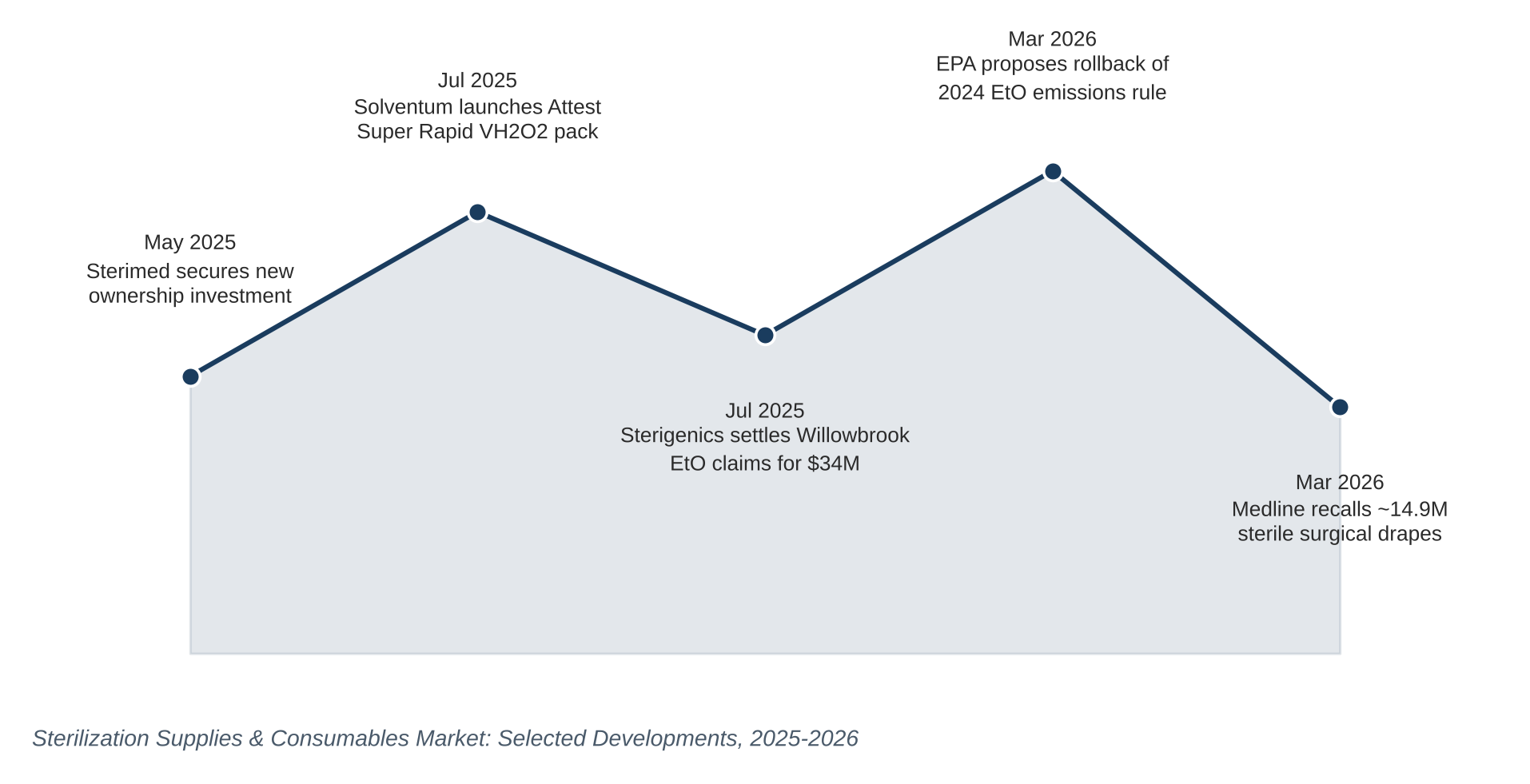
Figure 1. Selected dated developments in sterilization supplies and consumables, May 2025 through March 2026. Source: company, regulator, and legal announcements cited throughout this article.
Litigation Keeps Pressure on EtO Even as Federal Rules Ease
Sterigenics, a Sotera Health subsidiary, agreed in July 2025 to pay $34 million to resolve 129 ethylene oxide claims tied to its former Willowbrook, Illinois facility, including cases that had been scheduled for trial. The company denied liability, and the settlement was not an admission that the facility's historical emissions were unsafe. But it illustrates a pattern worth watching: facility-level legal exposure over EtO emissions continues on its own timeline, separate from and sometimes in tension with where the federal emissions rule itself is headed.
That combination, easing federal requirements alongside continued community and legal pressure, puts EtO sterilization operators and their consumable suppliers in an unusual position: regulatory relief on paper does not necessarily translate into reduced business risk.
| Date | Development | Category |
|---|---|---|
| May 2025 | Sterimed closes new ownership investment from IK Partners, Sagard | Investment |
| Jul 2025 | Sterigenics settles Willowbrook EtO claims for $34M | Settlement |
| Mar 2026 | Medline recalls ~14.9M sterile surgical drapes | Recall |
Source: Simpson Thacher (May 21, 2025); iTiger News (Jul 24, 2025); FDA recall database, Z-1423-2026 (Mar 4, 2026).
A Calibration Error, Not a Design Flaw, Took Out 15 Million Drapes
In March 2026, Medline Industries recalled approximately 14.9 million units of sterile surgical drapes and related procedure packs. The cause was not a defect in the drapes themselves but a calibration issue in the sterilization and packaging equipment used to process them, which the FDA said may have compromised the products' sterility assurance level. The agency classified the recall as Class II, citing a risk of infection during procedures using the affected products.
The scale of a single calibration-driven recall, nearly 15 million units from one manufacturer, is a useful reminder that sterility assurance depends on consistent equipment calibration and process control at the consumable manufacturer, not only on the sterilization method or indicator technology used downstream. A hospital following every sterile processing protocol correctly can still receive compromised product if an upstream calibration process drifts out of range.
What to Watch
Three threads are worth tracking into the rest of 2026: whether the EPA's proposed EtO rollback survives its comment period and the litigation that is likely to follow either way, whether more sterile processing suppliers face calibration or quality-control findings similar to Medline's, and whether suppliers continue shifting product design toward combined, preassembled indicators that reduce manual steps in sterile processing departments facing persistent staffing pressure.
Sterilization Supplies & Consumables Market Report: Size, Share & Trends 2026–2035
This article provides editorial and R&D context only. For full market sizing, segmentation, regional share, competitive benchmarking and forecasts through 2035, see the companion Sterilization Supplies & Consumables Market report.
Get a free sample of this report
Sterilization Supplies & Consumables Market